
If your home was built in the 1990s or 2000s, start a remodel with its current condition and the way your household lives, not a checklist of finishes associated with that decade. Address active problems, define the rooms that are not working, and build a coordinated plan before buying replacement surfaces. Some original features may be worth keeping; others may be limiting everyday comfort.
This guide is for homeowners considering an update in O’Fallon or the greater St. Louis area. It does not assume that every home of a particular age has the same materials, systems or problems. Previous renovations, maintenance and the original construction all matter.
What should come first?
Document leaks, damaged surfaces and other condition concerns.
Identify the three daily frustrations that matter most.
Review the layout before committing to new finishes.
Decide what to keep, repair, replace and investigate.
Coordinate connected rooms, lighting and storage.
Sequence work so a later phase does not undo an earlier one.
Should you fix condition issues before choosing colors?
Yes. A fresh surface is not a substitute for understanding why the old one failed. If there is staining, recurring moisture, damaged flooring or a fixture that does not work properly, have the issue assessed before covering it. Document what you see and when it happens, rather than trying to diagnose it from a photograph alone.
A professional review can help distinguish maintenance, repair and remodeling needs. The age of the home does not establish the condition of every component, and an attractive renovation does not prove the underlying systems were updated. Keep records of past work available for your team.
What parts of the layout deserve a fresh look?
Start with the rooms you use most. A kitchen may have ample cabinets but little preparation space. A bathroom may be large but offer awkward storage and poor lighting. A formal room may sit unused while the entry and family room handle too many activities.
Track where people and belongings actually go. Ask whether a better cabinet arrangement, doorway location or connection between rooms could solve the problem before deciding that every wall needs to disappear. Removing or altering walls requires a review of structural and mechanical implications, not just a preference for openness.
Our family kitchen layout guide offers practical questions for this part of the planning process.
Do all dated cabinets need replacing?
No. Separate appearance from condition and function. If the arrangement, storage and cabinet construction serve the household well, a carefully evaluated finish update may deserve consideration. If doors, drawers, dimensions or the layout are working against you, changing the color alone may leave the important problems untouched.
Look at the entire room before choosing a finish. Flooring, counters, light, trim and adjacent spaces affect how cabinetry reads. A sample viewed next to the existing materials is more useful than an isolated color online. Our cabinetry and painting services can be part of that broader conversation.
Book a Free Consultation to sort the changes that would genuinely improve your home from the ones that would simply make it look different.
How can lighting and storage change the experience?
Consider the activity at each location. Preparing food, reading, applying makeup and moving through the house at night do not all call for the same light. Review task areas, fixture placement and controls with the design team instead of replacing every fixture with another in the same location by default.
For storage, make an inventory of the items that never seem to fit. Small appliances, towels, cleaning supplies, recycling and household paperwork each need a practical home. The goal is not the largest possible number of doors. It is storage that is accessible where you use it.
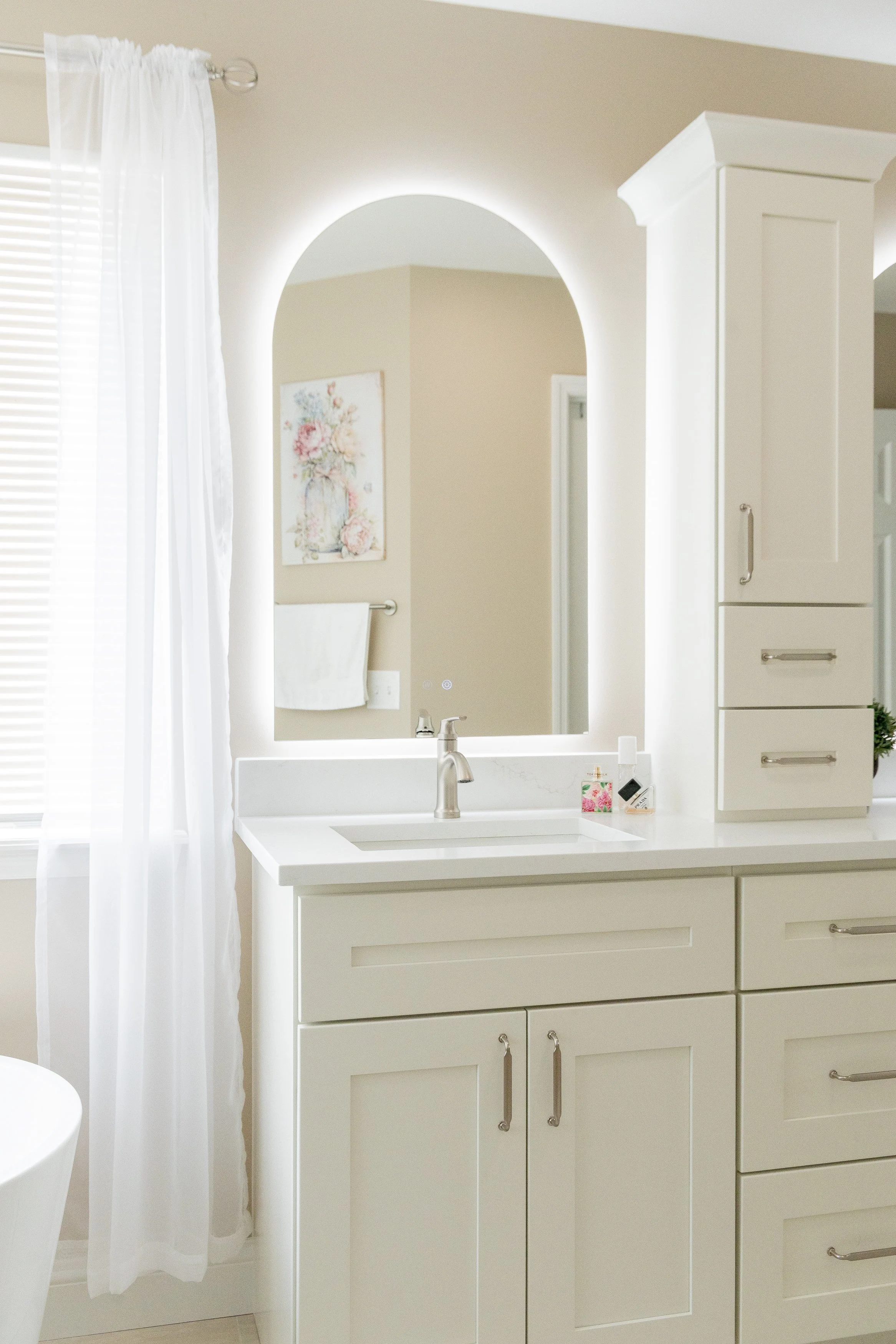
These decisions are particularly helpful before planning a bathroom remodel. Everstead bathroom remodels start at $20,000; the actual scope, conditions and selections determine the proposal.
How do you make separate updates feel coordinated?
Create a short whole-home direction even if construction will happen in phases. Identify the materials and colors you intend to retain, the level of contrast you like and the overall feeling you want. Then compare proposed finishes in the actual rooms and lighting.
Coordinated does not mean identical. A kitchen, powder room and primary bath can have distinct personalities while sharing a few deliberate connections. Avoid buying a finish because it is currently popular if it creates a new conflict with something you plan to keep.
What is a sensible order for phased work?
Sequence depends on the scope, but the principle is straightforward: resolve dependencies before installing work that could be disturbed later. Discuss layout, systems and affected surfaces together. A new floor, for example, should be considered alongside future cabinetry changes rather than as a completely separate decision.
Ask the team to identify decisions needed now, work that can safely wait, and the practical consequences of splitting the project. A phased plan should reduce uncertainty, not become a series of unrelated purchases. Our whole-home remodeling approach focuses on those connections.
Frequently asked questions
Does a 1990s or 2000s home need a full remodel?
Not automatically. Current condition, maintenance, previous changes and your needs matter more than the decade alone. Define what is not working before deciding how much to replace.
Should we follow current trends or choose timeless finishes?
Use trends as inspiration, not instructions. We recommend a durable, practical foundation and personal details you enjoy. The strongest design is one that fits your home and household rather than copying an entire room from elsewhere.
Can we keep original features and still create a fresh look?
Yes. Keeping sound, useful elements can provide character and a clear starting point. Review their condition and compatibility with the proposed work, then make the new choices intentional.
Will a few cosmetic changes solve a dysfunctional room?
They may improve its appearance without improving the problem. If circulation, storage or basic function is the concern, evaluate those first so the money spent on finishes supports a better plan.
Book a Free Consultation with Everstead to create a practical update plan built around your home and the way you want to live.
Reviewed and updated November 18, 2026. General planning guidance; the age of a home does not establish its condition or the work it requires.